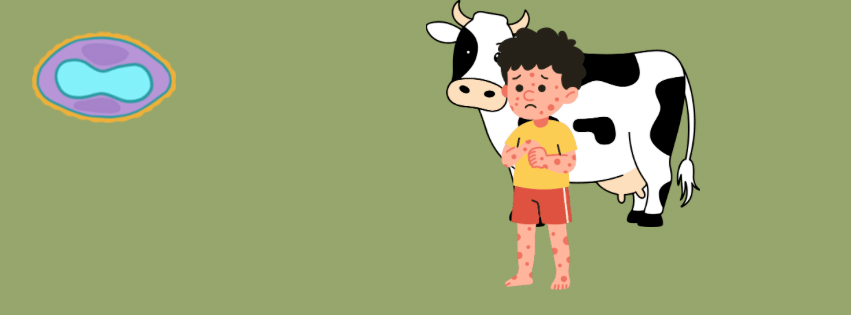
In the late 1700s, long before modern medicine existed, smallpox was one of the most feared diseases on Earth. It scarred, blinded, and killed millions, and it had been with humans for thousands of years.
In a small English village, physician Edward Jenner noticed that farmworkers who caught cowpox, a mild infection, rarely became sick during smallpox outbreaks. He wondered if exposure to cowpox could protect people from smallpox itself.
In 1796, Jenner tested this idea by inoculating an eight year old boy, James Phipps, with cowpox. After Phipps recovered, Jenner exposed him to smallpox to see if immunity held. The boy remained healthy.
This experiment became the first real demonstration of vaccination, a word inspired by vacca, the Latin word for cow. Jenner’s work spread across Europe and changed the future of disease prevention.
Rumors and Resistance
Even with clear success, many people refused the smallpox vaccine. Rumors claimed that anyone who received a cowpox based vaccine would turn into a cow. Cartoons mocked the idea by showing people sprouting horns and hooves.
Despite this resistance, smallpox vaccination became required in Britain and the United States by the mid 1800s. People even needed vaccination certificates to travel.
Innovation and the Path to Eradication
In the 1950s, scientists created a freeze dried version of the smallpox vaccine that could survive heat and travel long distances. This improvement helped eliminate smallpox in Western Europe, the United States, and Japan.
In 1958, the World Health Organization launched a global effort to wipe out smallpox everywhere. During the Cold War, the United States and the Soviet Union even worked together to fund and distribute vaccines around the world.
The progress was remarkable.
South America eliminated smallpox in 1971 Asia in 1975 Africa in 1977
In 1980, the World Health Organization declared smallpox eradicated worldwide. A disease that killed millions was gone because countries cooperated and vaccination was widespread.
Why Smallpox Is the Only Disease We Have Eradicated?
Smallpox was a unique target for eradication. It infected only humans, had obvious symptoms, and the vaccine provided strong protection. Other diseases are more difficult to eliminate because they can survive in animals or the environment.
Polio is close to eradication, with only a few countries still reporting cases. Diseases like malaria remain far more challenging because they are spread through mosquitoes.
The Lesson of Smallpox
The story of smallpox shows the power of vaccination and global cooperation. It proves that eradication is possible and that vaccines remain one of the strongest tools we have to stop deadly diseases.
To learn more about the history of smallpox check out this cool video.


 Think Like a Scientist
Leave a reply to Jaydeep Chauhan Cancel reply