On a hot summer day in the 1940s, parents across the United States shared the same quiet fear. Swimming pools closed. Movie theaters emptied. Children were kept indoors, not because of storms or war, but because of an invisible enemy that struck hardest in the warm months.
Poliomyelitis, or polio, isn’t a modern disease. Evidence of it appears throughout human history, etched into ancient bones and recorded in early medical texts. But for reasons scientists are still untangling, polio didn’t erupt into massive epidemics until the early 20th century. And when it did, it arrived with terrifying speed.
By the late 1940s and early 1950s, polio epidemics peaked each summer. In 1949 alone, the United States reported 42,173 cases and 2,720 deaths. Nearly every family knew a child who had been affected. Some survived. Many didn’t. Others lived, but never walked again.
What Is Polio, Anyway?
Polio is a virus spread through the mouth and through contact with feces (yes—gross, but important). Most people who are infected never know they have it. Their immune system clears the virus quietly, without symptoms.
But for a small percentage of people, especially children, the virus does something far more dangerous. It invades nerve cells and attacks the spinal cord. When that happens, muscles stop working. Arms and legs can become permanently paralyzed. In severe cases, the virus affects the muscles that control breathing.
This is where the haunting image of the iron lung comes in. These massive metal machines used pressure to move a person’s diaphragm, breathing for them when their own body could not. Hospital wards once lined with rows of iron lungs stand as one of the most chilling reminders of what polio could do.
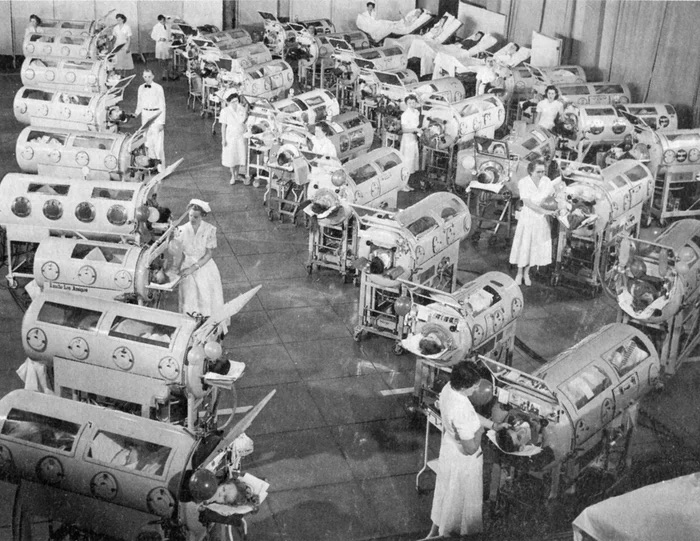
Children in iron lungs during a polio outbreak in the US in the 1950s. Photograph: Science History Images/Alamy Stock Photo
Racing Against a Virus
Scientists had been studying polio since the 1930s, desperate for a way to stop it. Several experimental vaccines were developed around the world, but a major breakthrough came in 1952, when American researcher Jonas Salk created a vaccine using an inactivated (dead) version of the virus.
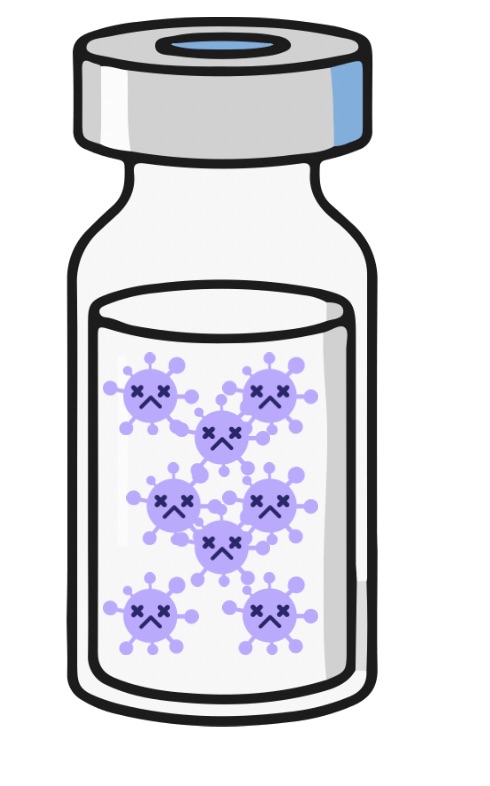
In 1955, the polio vaccine became publicly available.
The response was enormous. The March of Dimes, a nonprofit organization originally founded to fight polio, launched one of the largest vaccination campaigns in history. Parents lined up with their children. Schools became vaccination sites. Communities rallied around science.
And it worked.
By 1961, reported polio cases in the U.S. dropped to just 161.
The Cutter Incident: A Scientific Setback
But the story of polio vaccines isn’t without its complications.
Shortly after the vaccine rollout in 1955, the U.S. Surgeon General received alarming reports: some children developed paralytic polio about a week after being vaccinated. An investigation revealed the cause, Cutter Laboratories, one of the manufacturers, had failed to fully inactivate the virus in certain batches.
The result was devastating. The error caused 260 cases of polio and 11 deaths.
Public trust took a hit. Vaccination rates dropped. But the response to the Cutter Incident permanently changed how vaccines are made. It led to strict manufacturing regulations, extensive safety testing, and multiple layers of oversight, systems that still protect vaccine safety today.
Science learned. And science improved.
The Sabin Vaccine
Enter Albert Sabin, another scientist with a different approach.
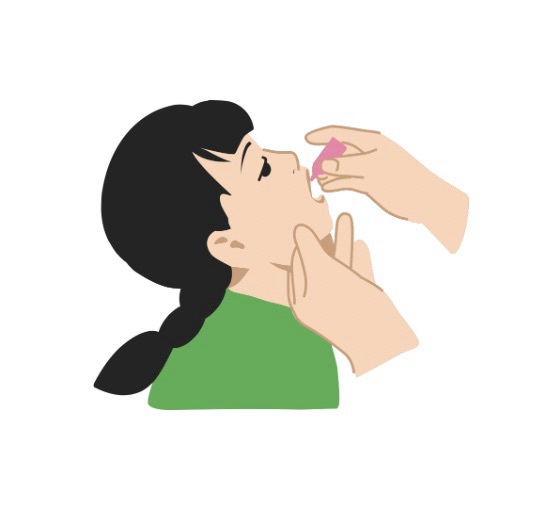
Sabin developed a live attenuated polio vaccine, meaning the virus was weakened so it couldn’t cause disease. This vaccine was taken by mouth, no needles required. It was easy to administer, inexpensive, and ideal for large-scale, global distribution.
The Sabin vaccine became a game-changer, especially in low-resource settings. It helped drive polio rates down worldwide and remains in use in many countries today.
Taking Polio Off the Map
In 1988, the World Health Organization launched a global effort to eradicate polio entirely.
The results were extraordinary.
- The Americas were declared polio-free in 1994
- Europe followed in 2002
- India, once considered one of the most challenging places to eliminate polio, was declared polio-free in 2014
Today, wild polio virus remains endemic in just two countries: Pakistan and Afghanistan.
When Trust Is Broken
Polio’s persistence in Pakistan is not due to science failing; it’s due to trust being broken.
In the early 2010s, the CIA ran a fake vaccination campaign, pretending to distribute hepatitis vaccines while secretly collecting DNA samples in the search for Osama bin Laden. When this program was exposed, it had devastating consequences. Violence against healthcare workers increased. Vaccine hesitancy surged. Polio cases rose.
The fallout was so severe that the CIA now has a strict policy prohibiting the use of vaccination or health programs for intelligence purposes. It was a painful reminder that public health depends not just on science, but on trust.
The Modern Polio Vaccine
While polio has been eliminated from most of the world, vaccination remains essential.
In the United States, children receive the inactivated polio vaccine (IPV), a dead virus vaccine, given as a shot since 2000. Kids receive four doses between 2 months and 6 years old, building lifelong protection.
Thanks to vaccines, most children today will never fear paralysis from polio. They will never know the sound of an iron lung or the summer panic that once gripped entire nations.
That’s the power of thinking like a scientist, and working together.
Resources:
https://www.theguardian.com/society/2020/may/26/last-iron-lung-paul-alexander-polio-coronavirus
https://www.mayoclinic.org/diseases-conditions/history-disease-outbreaks-vaccine-timeline/polio

 Think Like a Scientist
Leave a comment