
Today, handwashing is one of the most basic rules of medicine. Posters line hospital walls. Doctors scrub in before surgery. Medical students are trained from day one: clean hands save lives.
But less than 200 years ago, this idea was radical, and the man who proved it paid a devastating price for being right.
A Deadly Mystery in a Maternity Ward
In the 1840s, Vienna General Hospital was one of the most respected medical institutions in Europe. Yet inside its maternity ward, something horrifying was happening.
Women were dying. A lot of them.
The hospital had two maternity clinics. One was staffed by physicians and medical students. The other was run entirely by midwives. Strangely and disturbingly, women who gave birth under the care of doctors were far more likely to die from childbed fever than those attended by midwives.
In some months, the mortality rate in the doctors’ clinic reached nearly 10 percent. Women begged to be admitted to the midwives’ ward. Some even gave birth in the streets to avoid entering the physicians’ clinic at all.
No one could explain why.
Theories That Missed the Mark
Doctors investigated everything they could think of, including ventilation, birthing positions, diet, and even the ringing of church bells. One particularly bizarre theory suggested that women were dying because they were embarrassed by being examined by male physicians and that the shame itself was making them sick.
None of these explanations held up. The deaths continued.
Enter Ignaz Semmelweis, a young Hungarian physician working at Vienna General Hospital. Unlike many of his colleagues, Semmelweis refused to accept that this was simply the way things were. He believed there had to be a cause, and that meant there had to be a solution.
A Tragic Clue
Semmelweis was deeply puzzled until tragedy struck close to home.
His friend and colleague, Jakob Kolletschka, died after being accidentally cut by a student during an autopsy. As Semmelweis reviewed Kolletschka’s illness, something chilling stood out. His symptoms were nearly identical to those of the women who had died from childbed fever.
Suddenly, the pieces fell into place.
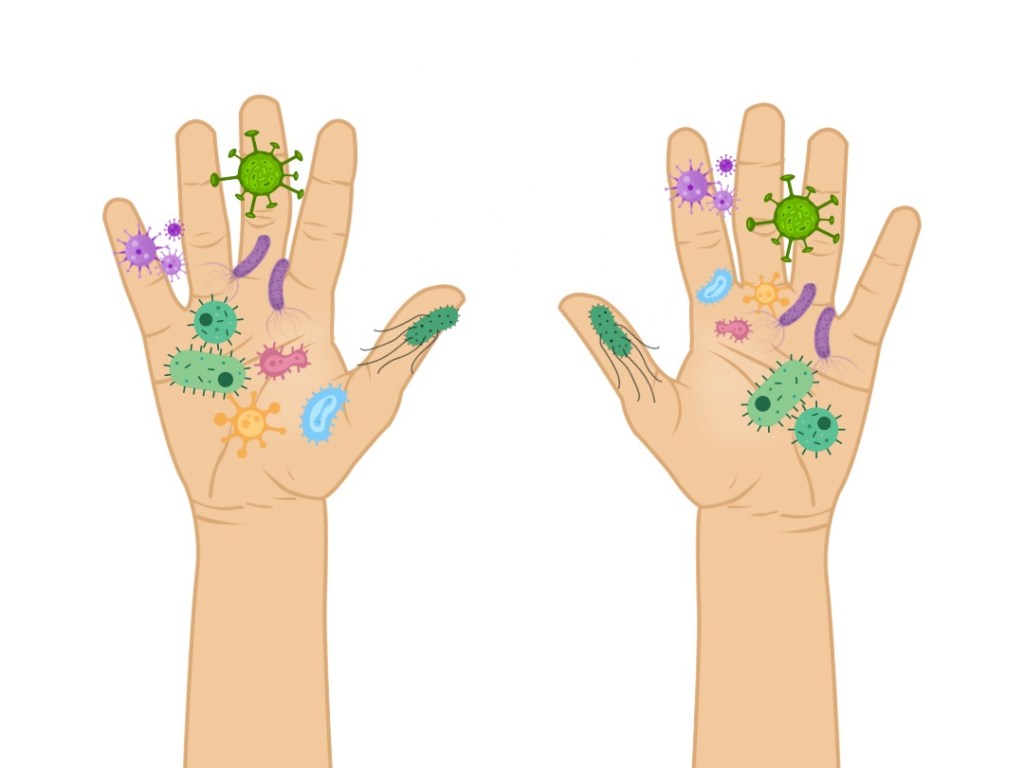
Doctors and medical students routinely moved directly from performing autopsies to delivering babies without washing their hands properly. At the time, handwashing meant a quick rinse with soap and water, mostly to remove visible dirt. But Semmelweis realized something far more sinister was happening.
Doctors were carrying invisible material from dead bodies into the delivery room.
“Cadaver Particles” and a Revolutionary Idea
Semmelweis called this substance cadaver particles. He believed these particles were being transferred from doctors’ hands into the birth canal, infecting women during childbirth.
This was a shocking idea. Germ theory did not exist yet. No one knew about bacteria or viruses. The concept that something invisible could cause disease sounded absurd to most physicians.
But Semmelweis did not stop at theory. He tested his idea.
He ordered doctors to wash their hands with a chlorine solution before examining patients. Chlorine was not chosen for its disinfecting properties because those were not understood yet. It was chosen because it effectively removed the lingering smell of autopsies from doctors’ hands.
The results were undeniable.
The Numbers No One Could Ignore
Within months, deaths from childbed fever plummeted. Mortality dropped from 7.8 percent to just 1.8 percent.
The data was clear. Handwashing saved lives.
Semmelweis published his findings, expecting celebration and widespread adoption. Instead, he was met with hostility.
Doctors rejected the idea that they were responsible for their patients’ deaths. Accepting Semmelweis’s theory meant admitting that their own hands, symbols of healing, had been killing women.
Rather than change their practices, many chose denial.
Rejected, Ridiculed, and Ruined
As his ideas were dismissed, Semmelweis grew increasingly frustrated and outspoken. He criticized fellow physicians harshly, calling out their refusal to adopt lifesaving practices.
This only isolated him further.
In 1865, broken by rejection and despair, Semmelweis suffered a nervous breakdown. His colleagues committed him to an asylum under false pretenses.
There, in a grim and tragic twist, Semmelweis was beaten by guards after attempting to escape. He died just weeks later from infected wounds.
A Legacy That Lives On
Semmelweis did not live to see his ideas accepted. It was not until years later, with the rise of germ theory and the work of scientists like Louis Pasteur and Joseph Lister, that the medical world finally understood what Semmelweis had been right about all along.
Today, handwashing is one of the most powerful tools in public health. It protects patients, healthcare workers, and entire communities.
And it all started with a doctor who dared to… think like a scientist.
Citation
Tyagi, U., & Barwal, K. C. (2020). Ignac Semmelweis—Father of hand hygiene. The Indian Journal of Surgery, 82(3), 276–277. https://doi.org/10.1007/s12262-020-02386-6 (PMCID: PMC7240806)

 Think Like a Scientist
Leave a comment