When you hear about a new study in the news that maybe said something like: “New Study shows coffee boosts your memory!” it’s easy to assume that the research has equal merit to that of other research. The truth is, not all research studies are structured the same.
Some are small and specific, some look at thousands of people, some look for patterns or connection, while others look at treatments directly.
Almost all studies fall into two categories:
- Observational Studies:
- Researchers are observing what is happening without any interference.
- They look for patterns, connections, or relationships
- Example:
- Tracking diets to see if people who eat more vegetables have lower cholesteral
2. Experimental Studies:
- Researchers intervene by testing a treatment, make a change, to see what happens
- These studies show cause and effect and are designed carefully
- Example:
- Giving one group a new medication and the other group a placebo then comparing results.
Types of Studies

- Case Study
A case study focuses on one person or small group of people when something new is observed. A doctor may write a paper about a patient who came in exhibiting strange and new symptoms. For example someone had a rare allergic reaction to a vaccine or medication.
Case studies are great for noticing new patterns or raising questions but they do not tell us if this is something everyone should be worried about. Scientists would call this an outlier or not something of statistical significance.
2. Case Series
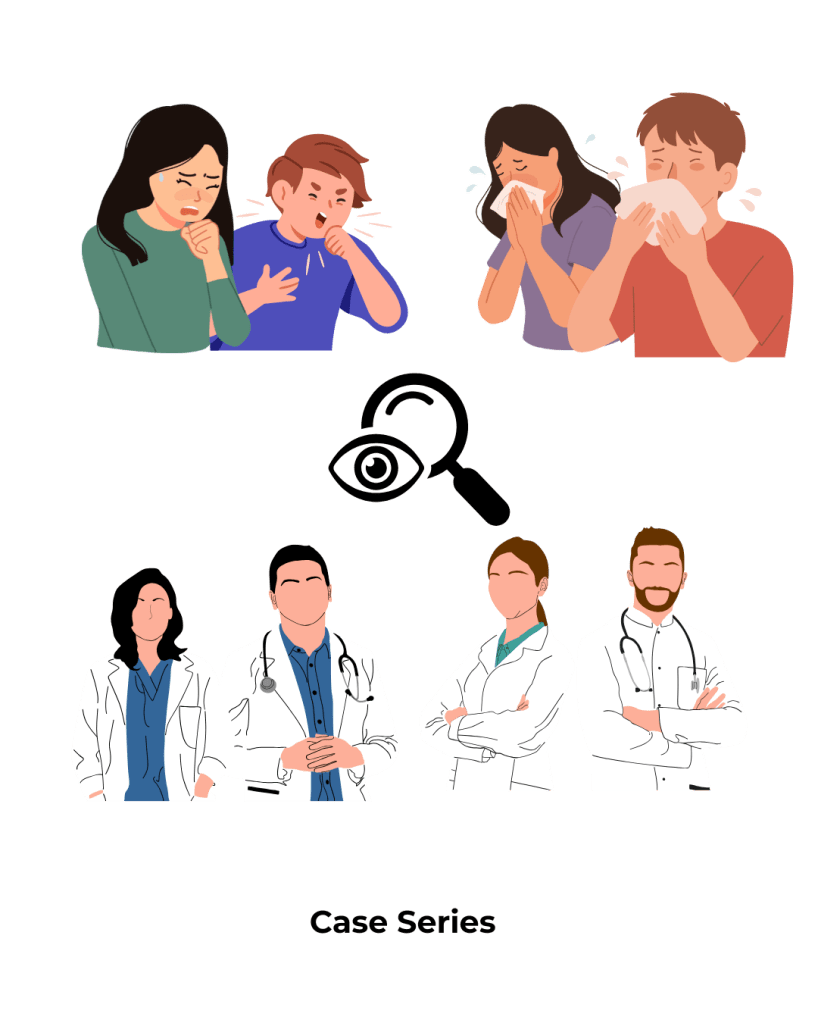
This is a small collection of similar case studies. Several doctors could report a small group of people who had similar symptoms of a disease or maybe a group of people had a side effect to a medication they all were taking.
This is helpful for spotting trends but not for proving cause and effect.
3. Cross-Sectional Study
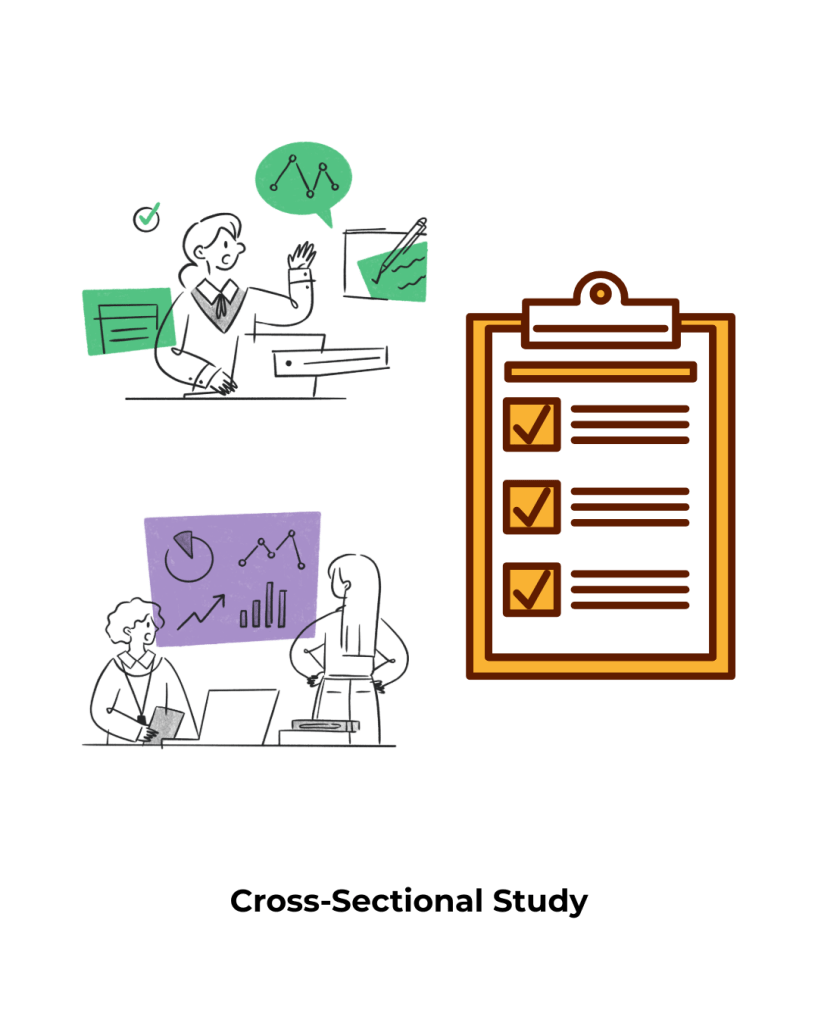
A cross-sectional study takes a snapshot of a group of people at a point in time. For example a researcher might take a survey of 5,000 adults to determine how much they exercise and whether they have high blood pressure.
It can show associations that people who exercise more tend to have a lower blood pressure but not that exercising caused low blood pressure.
4. Case-Control Study

These types of studies look backwards in time to find clues about what might have caused something. For example scientists could look at the past of people with lung cancer to determine what commonality all patients had that caused the cancer. They could ask the patients about their past smoking habits.
A case-control study is great for studying more rare diseases, but it relies heavily upon the memory and past data. This can lead to a lot of biases.
5. Cohort Study
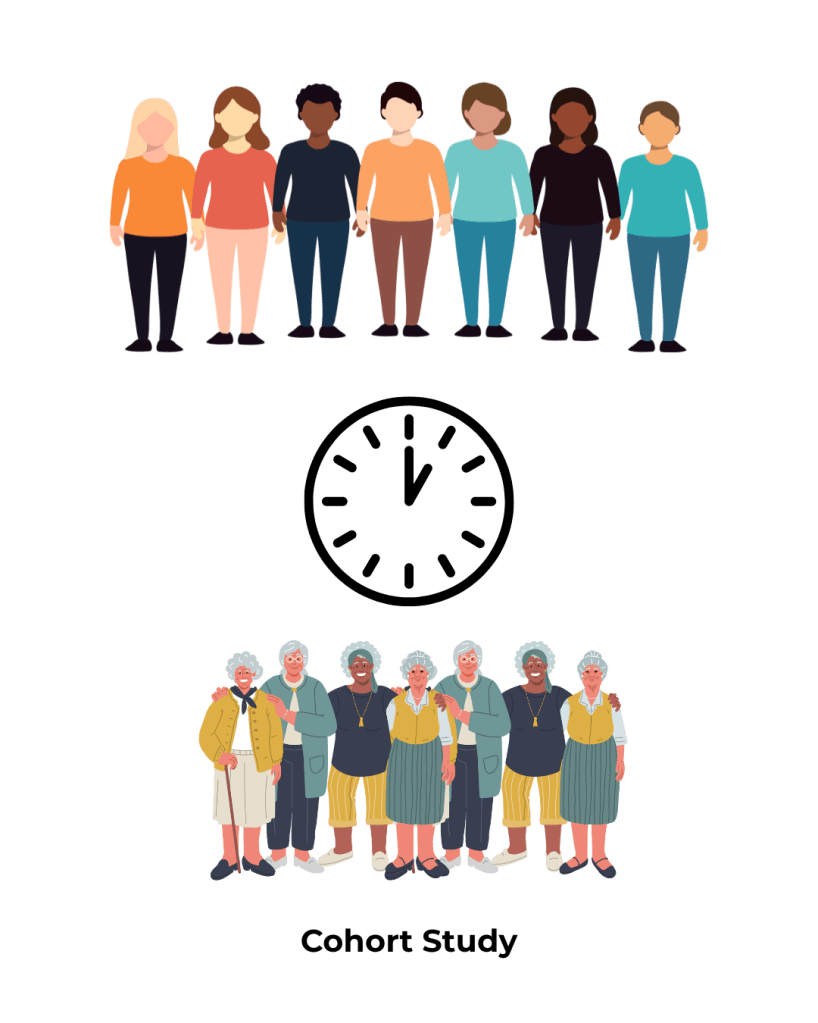
A cohort study follows a group of people over time to see what happens. For example a researcher could follow a group of 10,000 people for 20 years to determine how their diet affects their heart health.
This can help identify risk factors and how behaviors or exposures can lead to future outcomes. These studies are more powerful but often very costly and time consuming.
6. Ecological Study
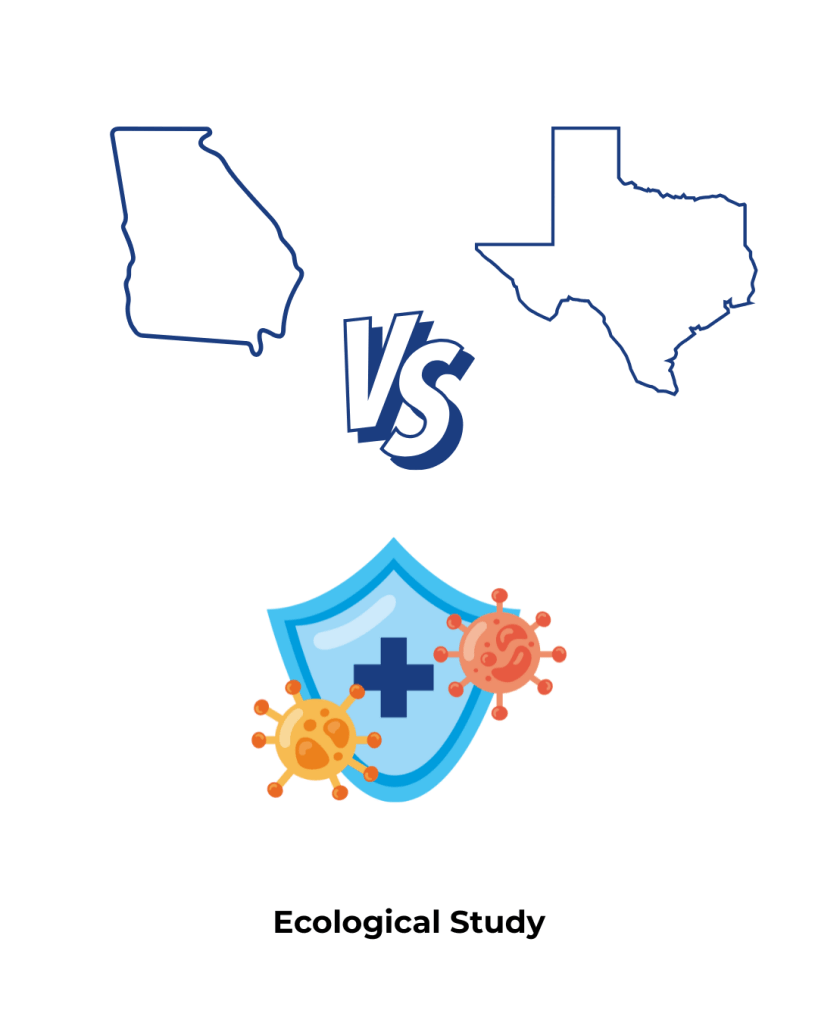
Ecological studies look at data from groups or populations, not the individuals. For example a researcher could compare vaccination rates in Georgia to Texas and see if they had different infection rates.
They can reveal patterns at a big-picture level, but they can not tell us what’s true for individuals.
7. Randomized Controlled Trial

This is the gold standard of experimental research. Participants are randomly assigned to two or more groups. One gets the treatment being tested while the others get a placebo or standard treatment.
In a vaccine trial, one group will get the new vaccine, and another gets a placebo. Neither participants nor the researchers know who is in which group until the study ends.
Participants are randomly assigned which eliminates any bias and allows scientists to say the treatment caused the outcome.
What does the study mean?
The more participants a study has the more reliable the results are. A study with 20 people might find an interesting finding but a study with 2,000 people will give a clearer answer. The more people the greater the chance of the results not being a coincidence.
If you see a poll or survey, would you trust a survey with 10 people’s opinion or 10,000 people more?
By understanding the types of studies you can better interpret headlines with a sharper eye. Science builds understanding piece by piece by adding context. A single study might spark excitement, but real scientific confidence comes when multiple studies, across different types, point to the same findings.
So the next time you see a new study, pause and….. think like a scientist.

 Think Like a Scientist
Leave a comment